


Triad In-Ceiling Speakers: Invisible Audio for Luxury Homes

A luxury home should not have to choose between exceptional sound and an exceptional visual environment. Triad in-ceiling speakers: the invisible audio solution for luxury homes answer that challenge with architectural audio designed to disappear into the ceiling while delivering music, television audio, and entertaining experiences that feel present, detailed, and properly placed.
For homeowners, builders, architects, and interior designers, the appeal is immediate. There are no freestanding speakers competing with furnishings, no exposed cables interrupting a clean wall treatment, and no need to compromise a carefully planned ceiling line. The right system brings sound into the room without making the equipment the focal point.
Why Invisible Audio Matters in a Luxury Home
In premium residences, technology works best when it supports the way the home looks and feels rather than asking for attention. A beautifully finished great room, kitchen, primary suite, or covered patio may have stone, wood, glass, custom millwork, and thoughtful lighting layered throughout. Traditional speakers can disrupt that composition, even when they sound excellent.
Triad in-ceiling speakers provide a more intentional alternative. Their low-profile grilles can be selected and finished to coordinate with the ceiling, allowing the system to blend into its surroundings. That discretion makes them especially well suited to open-plan homes, contemporary interiors, and rooms where wall space is reserved for art, windows, or architectural detail.
“Invisible” should be understood as a design outcome, not a claim that the speakers are literally undetectable. A ceiling grille will still exist. The difference is that it becomes a quiet, integrated part of the architecture instead of a visible piece of AV equipment.
Triad In-Ceiling Speakers Are Built for More Than Background Music
A common mistake in whole-home audio planning is treating every room as if it has the same acoustic needs. It does not. The soundtrack for a casual weekday morning in the kitchen is different from the demands of a large gathering, a movie in the media room, or a relaxed evening on the patio.
Triad’s architectural speaker approach gives a professional integrator the flexibility to match speaker type, placement, and output to the room. Rather than simply adding a pair of speakers wherever there is open ceiling space, the system can be designed around room volume, ceiling height, furnishings, surface materials, and how the space will actually be used.
In a kitchen and breakfast area, the goal may be broad, even coverage at comfortable volume. In a great room with tall ceilings, additional speakers or a more capable model may be required to maintain clarity without forcing the system to work too hard. In a primary bathroom, careful placement can create a private, spa-like experience without turning the room into an echo chamber.
That planning is what separates architectural audio from a collection of speakers installed room by room.
Sound Coverage Depends on Placement
Speaker location has a direct effect on the listening experience. A single pair of in-ceiling speakers may be enough for a smaller room, but large open areas frequently need more coverage points. The objective is not simply to make the room louder. It is to produce consistent sound so people can move from the kitchen island to the dining area or seating area without dramatic changes in volume and tonal balance.
Ceiling height also matters. A speaker that performs well in an eight-foot ceiling may require a different layout in a 14-foot great room. Wood beams, HVAC registers, recessed lighting, skylights, and fire-suppression requirements all influence the final plan. These details are best addressed before drywall, although experienced professionals can often create effective solutions in finished homes as well.
The Right Speaker Is Only Part of the System
An in-ceiling speaker cannot compensate for poor amplification, unreliable networking, or an interface that makes the system difficult to enjoy. Whole-home audio is an ecosystem. Sources, amplifiers, control, network performance, and speaker design all need to work together.
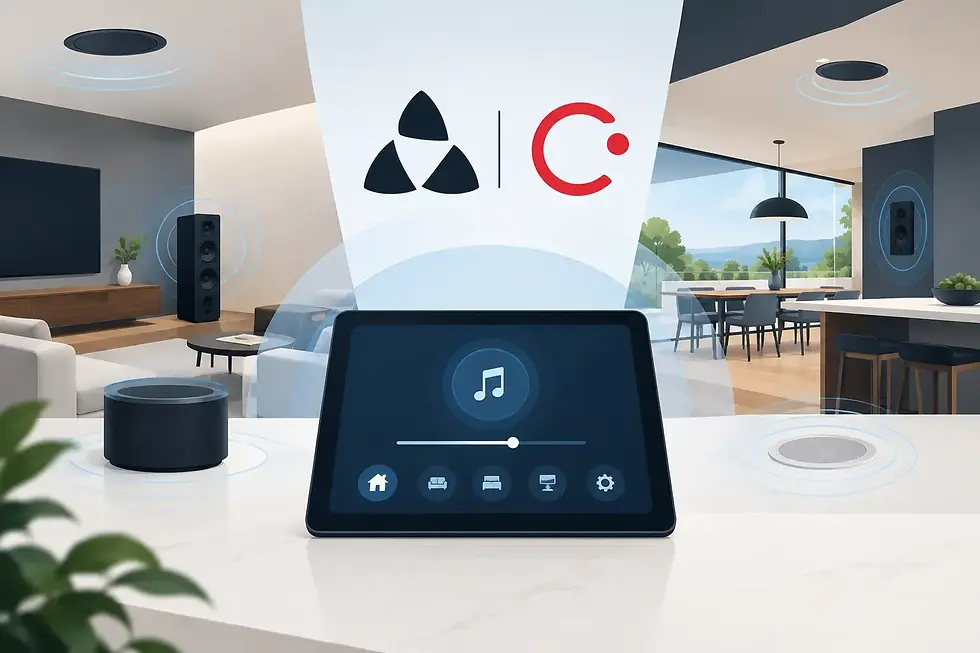
With a professionally configured Control4 system, homeowners can select music, adjust volume, group rooms, and create favorites from a touchscreen, remote, phone, or voice interface. A single command can bring music into the kitchen, dining room, and outdoor living area before guests arrive. Later, those zones can separate so one person listens to a playlist on the patio while someone else watches television in the family room.
The technology should feel simple because the design behind it was thorough.
Where Triad Architectural Audio Delivers the Most Value
Triad in-ceiling speakers are particularly effective in the spaces where audio should enhance the atmosphere without imposing on the interior design. Kitchens and living areas benefit from balanced music coverage. Bedrooms and bathrooms gain a more personal listening experience. Hallways, dressing rooms, garages, and home offices can receive the same polished control without adding visual clutter.
Outdoor areas require a more specialized conversation. Standard indoor in-ceiling speakers are not the right choice for an exposed patio, pool deck, or landscape. Weather-rated architectural speakers, surface-mount options, and landscape audio are often better suited to those environments. The benefit of a unified control platform is that indoor and outdoor zones can still operate together, even when the speaker types are different.
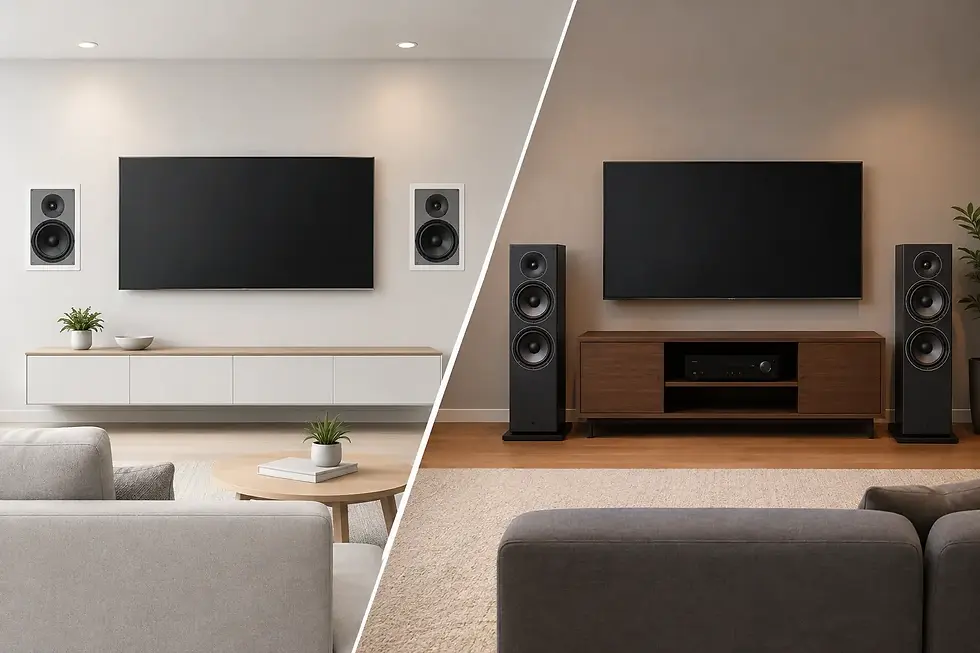
For television spaces, in-ceiling speakers can contribute to distributed audio or surround effects, but they are not always the best standalone solution for dialogue. A dedicated center-channel speaker near the display is usually the stronger choice when clear movie and television dialogue is a priority. This is one of the trade-offs worth addressing early: invisible audio is ideal for many applications, while a purpose-built theater or media room may call for a combination of architectural and visible performance speakers.
Planning Around Design, Construction, and Future Changes
The best time to plan in-ceiling audio is during a new build or major renovation. At that stage, wiring pathways, speaker backing, lighting locations, and equipment placement can be coordinated with the builder and design team. This reduces surprises, protects the ceiling design, and gives the system a cleaner final result.
Preconstruction also creates options for future adaptability. Additional wiring can support new zones, upgraded amplification, subwoofers, outdoor audio, or changes in how a room is used. A formal dining room may later become a study, lounge, or flexible entertaining space. Thoughtful infrastructure prevents the home from being locked into yesterday’s priorities.
Existing homes can still benefit from architectural audio, but the approach should be more selective. Access above the ceiling, structural conditions, insulation, and finished surfaces may influence what is practical. A site evaluation clarifies where speakers can be added cleanly and where an alternative solution may better protect the home.
A Design-Led Installation Protects the Listening Experience
The installation process matters as much as the equipment selection. Speaker cutouts must be precise. Grilles need to sit cleanly. Wiring should be properly routed and labeled. Equipment must be ventilated, organized, and accessible for service. Most importantly, the system should be tuned and tested after installation rather than treated as complete the moment the speakers are mounted.
SmartHome-Techs approaches architectural audio as part of a larger personalized environment. Lighting scenes, climate settings, motorized shades, security, entertainment, and audio can be designed to work from one familiar Control4 experience. That means a “Welcome Home” scene can set the entry lighting, adjust comfort settings, and begin music in the main living spaces without requiring a stack of disconnected apps.
For homeowners, this level of integration creates more than convenience. It creates consistency. Every room responds predictably, every family member has an approachable way to use the system, and professional support remains available as needs change.
A well-designed in-ceiling audio system earns its place by disappearing into daily life. You notice the music filling the room, the ease of control, and the freedom to enjoy a carefully designed home without visible technology competing for attention.
Comments