

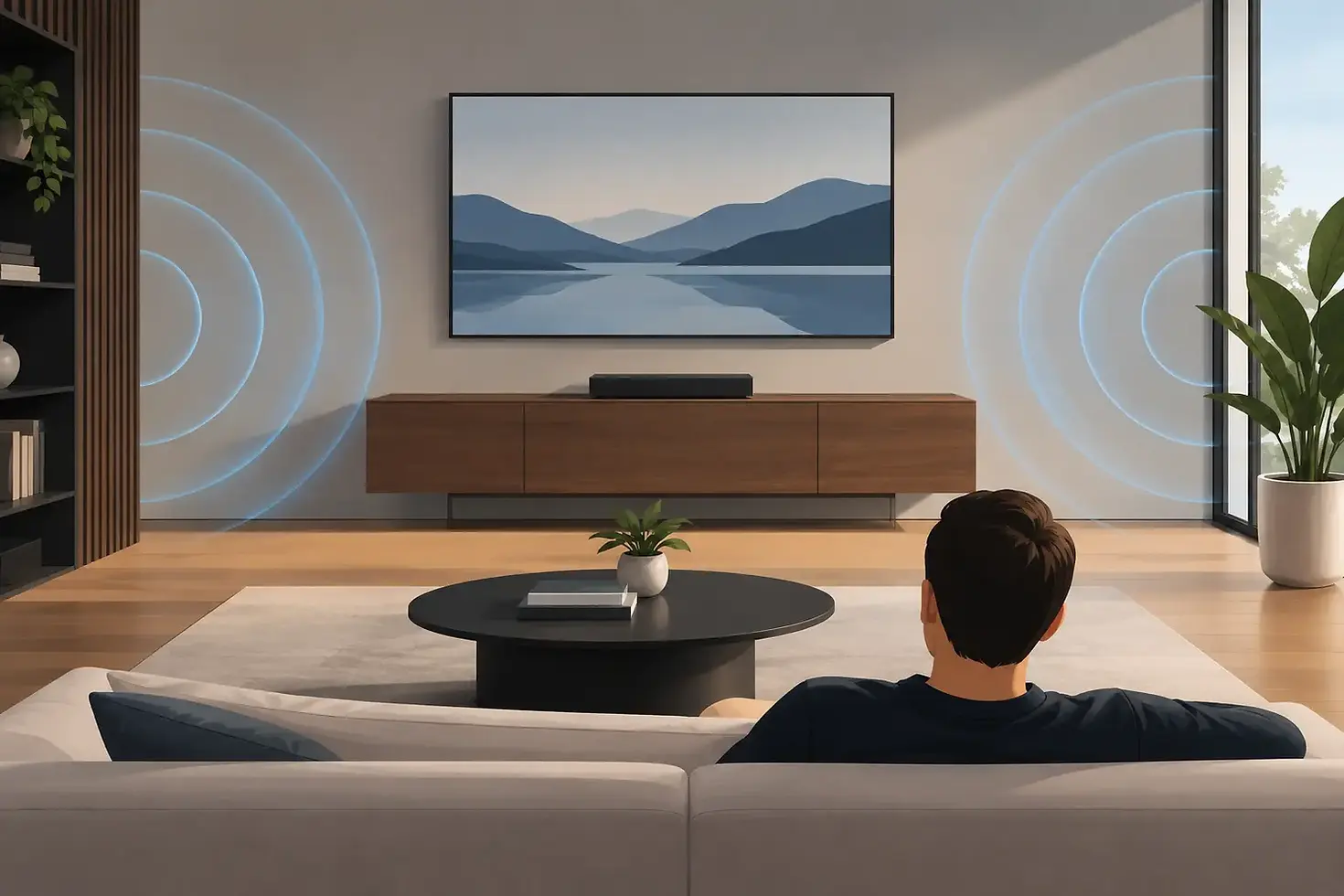
Triad Speakers: High-End Audio Without Seeing Speakers

A beautifully designed room can lose its sense of calm the moment large speakers, exposed wiring, and equipment cabinets start competing with the architecture. Triad speakers offer a different path: high-performance audio designed to disappear into the room while the experience remains fully present. For homeowners considering Triad speakers, how to get high-end audio without seeing the speakers starts with treating sound as part of the home’s design, not an accessory added after the furniture arrives.
That approach matters in South Florida’s clean-lined contemporary interiors, Colorado mountain homes with expansive glass and stone, and any residence where the visual details are as intentional as the entertainment. The goal is not simply to hide equipment. It is to create music, television, and theater sound that feels natural, powerful, and easy to enjoy from a single, personalized control system.
Why Triad Speakers Are Different
Many architectural speakers are selected primarily because they fit inside a ceiling or wall. Triad is built around a more performance-focused idea: the speaker should be engineered for its placement, the room’s purpose, and the homeowner’s listening expectations.
Triad offers in-ceiling, in-wall, on-wall, and subwoofer solutions that can be integrated into a broader whole-home audio or theater design. Custom paint matching and discreet grille options help the speakers blend with drywall, millwork, and surrounding finishes. In the right application, the visual result is remarkably restrained. Guests hear the system before they notice where it is coming from.
The difference is especially apparent when a room needs more than background music. A great room may need even coverage across an open kitchen, dining space, and seating area. A media room may need dialogue that remains clear at low volume and effects that stay controlled when the soundtrack becomes demanding. Outdoor living areas need music that reaches the entire space without blasting the seats closest to the house.
These are design challenges, not just product choices.
High-End Audio Without the Visual Clutter
Discreet audio works best when the speaker plan begins early. During a new build or major renovation, the system can be coordinated with lighting layouts, HVAC registers, ceiling details, motorized shades, and furniture plans. This avoids the familiar compromise of placing speakers wherever there happens to be open drywall.
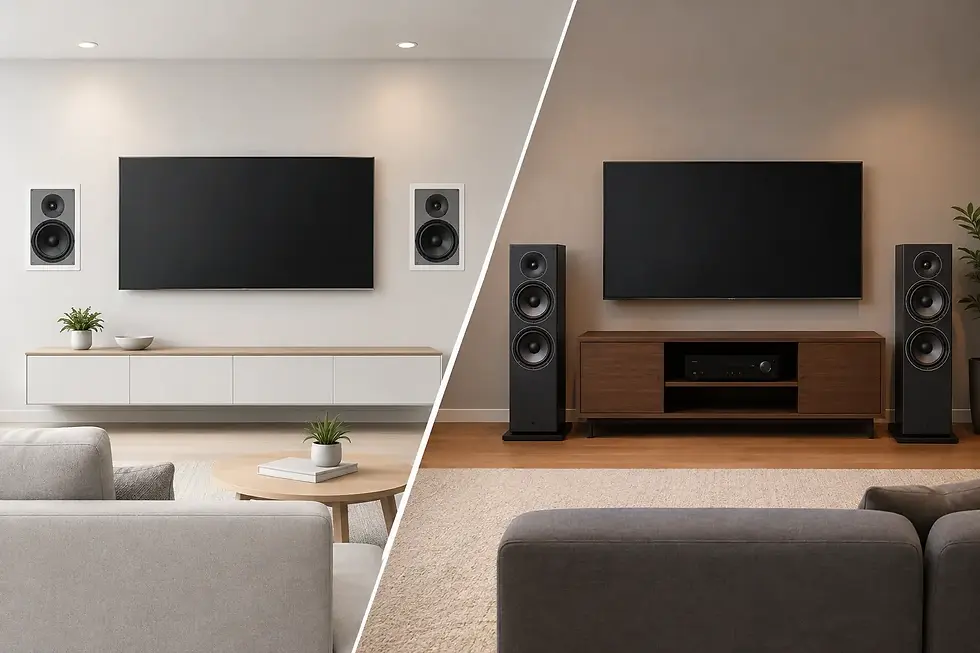
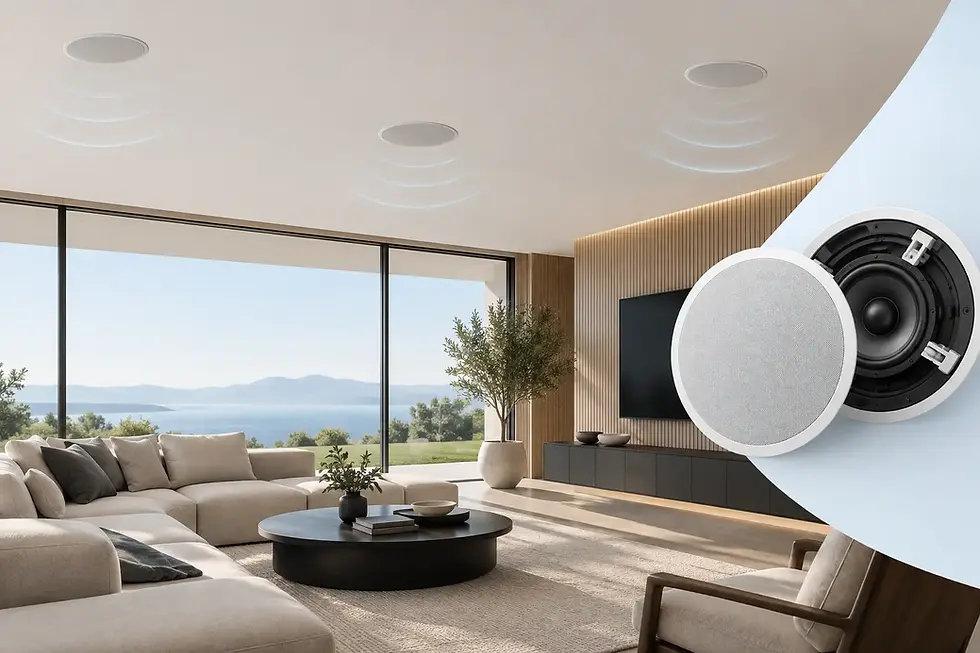
In-ceiling speakers can be an excellent solution for distributed music and many open-concept spaces. They preserve clean sightlines and can provide balanced coverage when properly spaced. In-wall speakers are often the stronger choice when stereo imaging, television sound, or front-channel performance is the priority, because their placement can align more naturally with the screen and the listener.
For a dedicated theater, speakers may be concealed behind an acoustically transparent projection screen, integrated into custom cabinetry, or installed within architectural wall treatments. The equipment can be placed in a nearby rack, closet, or utility space rather than under the display. The room stays refined, while the audio system has the foundation to perform at a much higher level.
There is a trade-off worth acknowledging. Invisible placement does not automatically guarantee exceptional sound. Speaker locations, enclosure requirements, room construction, amplification, and calibration still determine much of the final result. A speaker hidden in the wrong spot is still in the wrong spot. Professional design protects both the room’s appearance and its acoustic performance.
Triad Speakers for the Rooms You Actually Use
The best system is rarely the same throughout the house. A thoughtful design uses the appropriate speaker type, power, and control experience for each environment.
Open Living Areas
Open-plan homes can be difficult to fill evenly because there are fewer walls and many hard surfaces. Multiple architectural speakers, carefully distributed and tuned, can keep music present throughout the space without creating a hot spot over the kitchen island or forcing the volume too high in one area.
When television is part of the room, dedicated left, center, and right channels make a meaningful difference. The center channel is particularly important for dialogue. Rather than relying on the television’s built-in speakers, an integrated Triad system can anchor voices to the screen and make movies, sports, and streaming content more engaging.
Dedicated Media Rooms and Home Theaters
A theater is where discretion and performance have to work together most closely. Surround and height channels can be incorporated into the room’s surfaces, while properly placed subwoofers add depth without becoming a visual centerpiece. The objective is impact with control: clear dialogue, convincing movement around the room, and bass that feels full rather than boomy.
This is also where acoustic treatment may be worth considering. Even premium speakers cannot fully overcome a room with excessive echo, glass, or hard parallel surfaces. Treatments can be concealed within fabric walls, ceiling details, or custom panels so the room retains its intended aesthetic.
Bedrooms, Offices, and Private Spaces
Not every room needs theater-level output. In bedrooms and offices, a pair of well-positioned architectural speakers can make morning playlists, podcasts, and television more enjoyable without adding visible electronics. Individual room control means one family member can listen to music while another watches a game elsewhere, with no need to manage a collection of separate apps and remotes.
Outdoor Areas
A patio, pool deck, or outdoor kitchen calls for a different type of planning. Outdoor-rated speakers need to contend with weather, large open spaces, and ambient noise from water features, traffic, or conversation. The answer is usually not one louder speaker near the door. It is broader, lower-volume coverage from speakers located throughout the landscape or entertaining zone.
That approach delivers better sound for guests and is more considerate of neighbors. It also keeps the design focused on the view, the pool, and the architecture rather than conspicuous audio hardware.
The System Behind the Sound Matters
Speakers are only one part of the experience. Amplification gives them the control and headroom to perform cleanly, particularly in larger rooms or at entertaining volumes. Source components, network reliability, and professional programming determine whether the system feels effortless day to day.
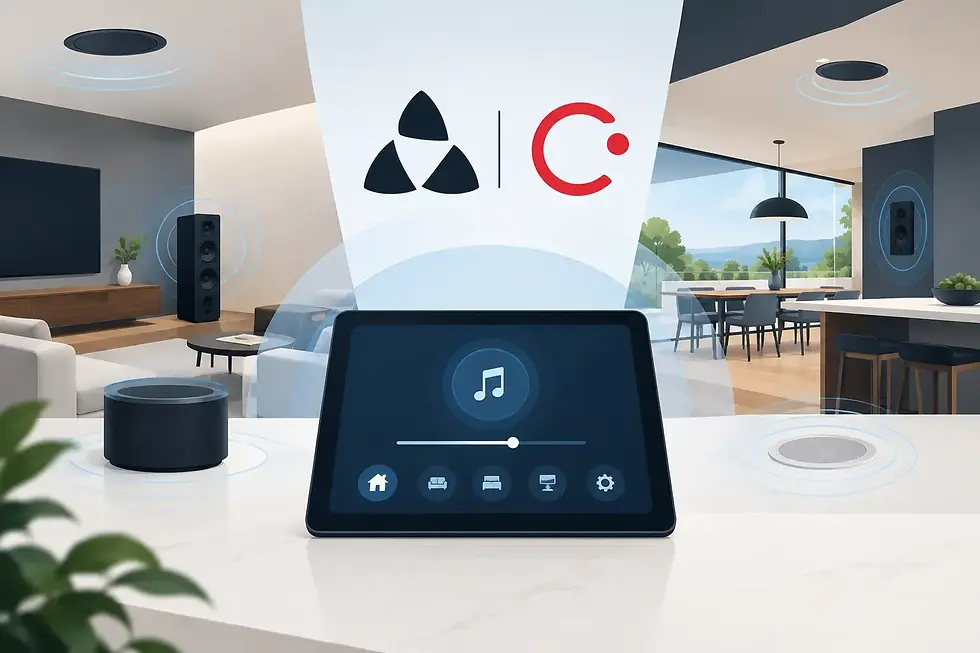
With Control4, Triad audio can become part of the home’s unified control experience. Select a room, choose a favorite playlist, adjust volume, or send the same music to several areas from a touchscreen, handheld remote, wall keypad, or mobile device. A “Dinner” scene might bring soft music to the kitchen, dining room, and patio while setting lights to the preferred level. A “Movie” scene can lower shades, dim lights, turn on the display, and set the theater to the right source and volume.
The technology should not ask everyone in the household to become an expert. It should respond predictably, keep the interface simple, and remain flexible as your routines change.
What Professional Design Prevents
A professionally planned audio system addresses details that are easy to overlook during construction. Cable pathways must be accessible and appropriately rated. Speaker back boxes or enclosures may be needed to manage sound quality and reduce sound transfer to adjacent rooms. The network must be reliable enough for high-resolution streaming across multiple zones. Equipment needs ventilation, service access, and enough capacity for future additions.
Just as important, professional calibration helps the system suit the room. Settings for crossover points, subwoofer integration, speaker levels, and room correction are not glamorous, but they are often what separate merely loud sound from audio that feels balanced and composed.
For an existing home, the possibilities depend on construction and finish conditions. Retrofits can be very successful, but they require a clear assessment of wall access, ceiling joists, insulation, electrical wiring, and surface materials. In some spaces, on-wall speakers finished to complement the room may be a better choice than cutting into an especially complex ceiling. The right answer depends on the architecture, not a one-size-fits-all formula.
Triad Speakers: High-End Audio Without Seeing the Speakers
The most successful audio installations do not make homeowners choose between performance and design. They let a room look like it was designed for living, while music fills it naturally and movie sound carries real scale. Triad speakers are particularly well suited to that balance because they can be specified as part of a complete architectural and control plan rather than treated as an isolated purchase.
SmartHome-Techs approaches that planning around how each household uses its spaces, from quiet weekday mornings to full weekends of entertaining. The result can be as simple as discreet music in the rooms you use most or as comprehensive as whole-home audio, a dedicated theater, outdoor entertainment, and Control4 scenes that bring it all together.
If you are planning a new home, remodeling a key room, or tired of visible speakers compromising the space, start with the floor plan and the way you want the home to feel. The best time to design invisible sound is before there is anything to hide.
Comments