


Control4 Whole Home Audio Control, Done Right

A great music system should not require a lesson before breakfast. With Control4 whole home audio control, one touch can bring a favorite station into the kitchen, move a playlist from the living room to the patio, or set a calm soundtrack throughout the home before guests arrive. The technology matters, but the experience matters more: music available where you want it, at the volume you expect, without a collection of competing apps, remotes, and visible equipment.
For homeowners in South Florida and Colorado, whole-home audio also has to suit the way a property is actually used. That may mean speakers that disappear into a carefully finished ceiling, weather-ready sound around a pool, distinct listening zones across multiple floors, or a theater-grade music experience in a dedicated media room. Control4 creates one intelligent interface for those environments while leaving room for the personal details that make the system yours.
What Control4 Whole Home Audio Control Changes
Most homes accumulate audio one room at a time. A wireless speaker appears in the office, a soundbar is added in the family room, and a portable speaker ends up outside. Each product may work well on its own, yet daily use becomes fragmented. Different accounts, inconsistent volume behavior, Wi-Fi dropouts, and separate controls turn simple music into a small task.
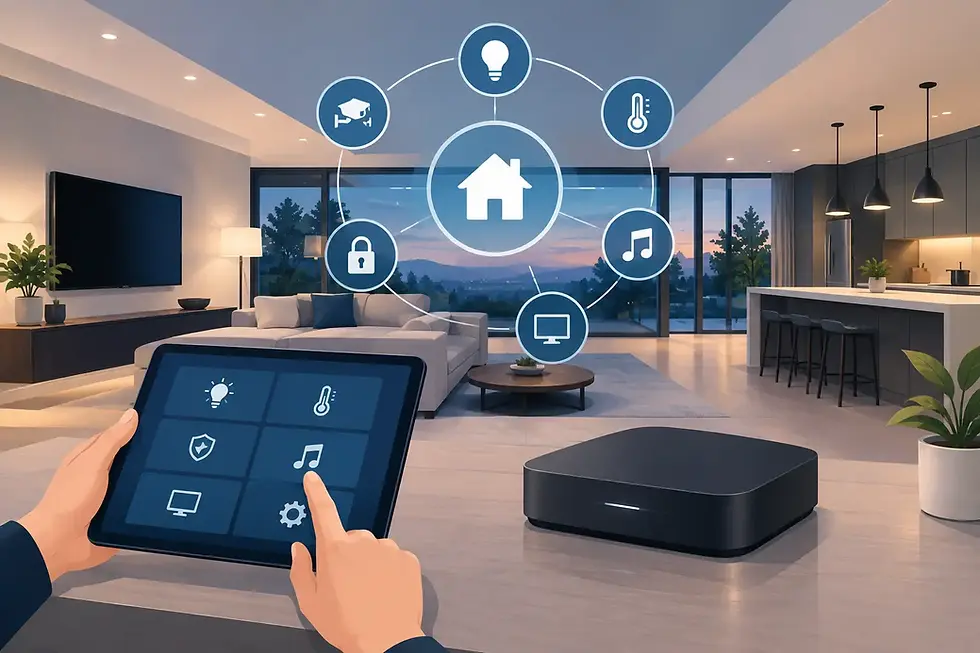
Control4 organizes compatible audio sources, speakers, amplifiers, and rooms into a unified system. From a touchscreen, elegant keypad, mobile device, handheld remote, or voice command, you can select music and decide exactly where it plays. A room can play independently, several spaces can share the same music, or the entire property can become one coordinated listening area.
That flexibility is especially valuable during the natural transitions of a day. Start news or a morning playlist in the primary suite, add the kitchen as the household gathers, then leave the bedrooms quiet. For entertaining, group the main living spaces and outdoor areas while allowing a child to listen to something different in a bedroom. The system should adapt to the home, rather than asking the home to adapt to the system.
One interface, not one kind of music
Centralized control does not mean limiting how you listen. A professionally designed Control4 system can bring together popular streaming services, internet radio, locally stored music, television audio, turntables, and other connected sources. The appropriate mix depends on your listening habits and existing equipment.
A vinyl collection, for example, may deserve a dedicated source connection and a listening zone with higher-performance speakers. A family that relies primarily on streaming may place more value on quick access to favorites and personalized presets. The goal is not to load every possible source into the interface. It is to make the sources you use most feel immediate and dependable.
Design the Audio Around Each Room
Whole-home audio is not simply a matter of putting speakers everywhere. Every room has different acoustics, furniture, ceiling heights, background noise, and expectations. A thoughtful design accounts for all of them before equipment is selected.
In a kitchen, evenly distributed in-ceiling speakers can provide comfortable coverage while conversation remains easy. In a large great room, speaker placement may need to work around beams, glass walls, artwork, and an open floor plan. A dedicated listening space may call for architectural speakers, traditional freestanding speakers, or a combination that delivers more depth and precision.
Outdoor spaces require even more planning. Pool equipment, wind, water features, traffic noise, and the size of the entertaining area all influence speaker selection and placement. A few speakers mounted near the house can leave the far end of a patio sounding thin while the nearest seats are too loud. Distributed landscape speakers and discreet in-ground subwoofers can create fuller, more even coverage across a garden, pool deck, or outdoor kitchen without dominating the view.
Hidden technology, intentional results
For many luxury homes, visual restraint is as important as sound quality. In-ceiling, in-wall, and landscape speaker options can preserve clean sightlines and complement the work of architects, builders, and interior designers. Equipment can be consolidated in a properly planned rack rather than scattered through cabinets and closets.
This approach also supports long-term service. Clearly labeled wiring, organized network hardware, appropriate ventilation, and accessible equipment locations make troubleshooting and future upgrades far simpler. A polished home should not have to sacrifice serviceability to keep technology out of sight.
There are trade-offs. Architectural speakers offer a refined, integrated appearance, while exposed speakers can offer placement flexibility and, in some rooms, a more focused high-fidelity listening experience. Neither choice is universally better. The right decision follows the room, the design intent, and the level of performance you expect.
Control That Fits the Moment
The best control method changes with the situation. When carrying groceries, a keypad near the entry can start a favorite playlist with a single button. While relaxing on the sofa, the Control4 interface can let you browse music, adjust volume, or add adjacent rooms. From another property or while traveling, remote access can confirm that outdoor audio was turned off after an event.
Audio can also become part of broader home scenes. A Good Morning scene might raise select shades, adjust the thermostat, turn on kitchen lights, and begin low-volume music. An Entertain scene can set lighting, activate designated indoor and outdoor zones, and choose a preferred station. At bedtime, a single command can turn off music throughout the home along with lights and selected entertainment systems.
These scenes should feel helpful, not overly automated. Some households want music to start only when requested. Others enjoy scheduled audio in a home gym or a gentle morning routine. Professional programming makes it possible to set sensible defaults while keeping manual control close at hand.
The Network Behind Reliable Music
Wireless audio often gets blamed when the actual issue is an underdesigned network. High-resolution streaming, multiple simultaneous zones, video calls, security cameras, and smart-home devices all compete for connectivity. In larger residences, concrete construction, metal framing, outdoor spaces, and long distances from access points can complicate coverage further.
A Control4 audio system performs best when its network is designed as part of the project, not treated as an afterthought. Properly placed wired and wireless infrastructure, managed networking equipment, and centralized service access help maintain stable playback across the property. Where possible, hardwired connections provide a dependable foundation for fixed equipment and high-demand areas.
This is one reason professionally integrated systems differ from a collection of consumer devices. The audio system, network, controls, and power management are considered together. When something needs attention, there is a clear design plan and a knowledgeable team that understands how the pieces relate.
Planning for a New Build or Existing Home
New construction offers the most freedom. Wiring can be installed before drywall, speaker locations can be coordinated with lighting and HVAC plans, and equipment space can be reserved early. Builders and designers benefit when technology is discussed before finished surfaces and furniture layouts make changes more difficult.
Existing homes can still achieve exceptional results. Wireless control, selective wire routing, surface-mount options, and carefully chosen architectural speakers can reduce disruption. The key is a realistic walkthrough and system plan. Some walls may be easy to access; others may not be worth opening. Sometimes a focused upgrade to the rooms used most will provide more value than trying to address every space at once.
Scalability should be part of either approach. You may begin with the kitchen, great room, primary suite, and patio, then expand to additional bedrooms, a gym, or a guest house later. A correctly designed Control4 foundation supports that growth without forcing you to start over.
Why Professional Integration Matters
Audio is only satisfying when it works consistently. That requires more than selecting recognizable brands. It calls for correct amplifier sizing, speaker matching, source configuration, network planning, acoustical awareness, clean installation, and programming that reflects the household's routines.
SmartHome-Techs approaches Control4 systems as a personalized environment, not a box of products. The process begins with how you live in the home: where you gather, where you relax, which areas need independent control, what should disappear into the architecture, and how music should work with lighting, climate, security, and entertainment. From there, the system can be designed for present needs and future possibilities.
Support after installation matters just as much. Streaming services change, preferences evolve, and homes gain new rooms, equipment, and routines. A professionally supported platform gives you a practical path for updates, adjustments, and expansion rather than leaving you to reconcile disconnected products on your own.
The right audio system is felt more than noticed. It brings the soundtrack to dinner, a quiet podcast to the morning routine, and the right energy to an outdoor gathering - then disappears from your attention when the moment calls for silence.


Comments