


Triad + Control4: Complete Whole-Home Audio Control

A favorite playlist should not stop at the kitchen doorway, get louder in one room than another, or require a different app every time someone walks outside. Triad + Control4: complete whole-home audio control is designed to make music feel like part of the home itself - present where you want it, silent where you do not, and always simple to manage.
For homeowners building, renovating, or refining a high-value property, that difference matters. A professionally designed audio system does more than distribute sound. It creates a dependable entertainment experience that respects the architecture, supports the way each family member listens, and places control alongside lighting, climate, security, and other essential home systems.
Why Triad and Control4 Belong Together
Triad brings the physical performance: speakers, amplifiers, and audio components engineered for custom installation. Control4 provides the unified interface and intelligent programming that makes those components easy to enjoy. Together, they turn a collection of rooms and devices into one coordinated audio environment.
The value is not simply that music can play in multiple places. It is that every space can behave appropriately. The living room may be playing a high-resolution album, while the kitchen and patio share a relaxed dinner playlist. A bedroom can remain quiet. With a few taps on a Control4 touchscreen, in the mobile app, with a handheld remote, or through voice control, the system responds as one.
That unified experience is especially valuable in larger homes, properties with detached guest areas, and indoor-outdoor layouts common throughout South Florida and Colorado. Instead of relying on separate wireless speakers, competing apps, and inconsistent Wi-Fi connections, the audio system is planned as part of the home's technology infrastructure.
Complete Whole-Home Audio Control, Room by Room
A whole-home system should not force every room into the same listening experience. The best designs create zones that reflect how the home is actually used. A zone may be a single room, an open-concept kitchen and family room, a covered patio, or a group of spaces that should usually play together.
Control4 makes grouping and separating those zones straightforward. Start music in the kitchen, add the dining room when guests arrive, then extend the same source to the patio without restarting the playlist. If someone wants to watch a game in the media room while music continues elsewhere, the two experiences remain independent.
This also makes volume management more natural. There is no need to walk from room to room adjusting individual speakers. A homeowner can set the patio to a comfortable level from the kitchen, lower the main floor as children head to bed, or turn off every audio zone at once before leaving the house.
Music that follows the moment
The strongest whole-home audio systems are programmed around daily routines rather than product specifications. A Morning scene might bring a preferred station to the kitchen at a low volume while shades rise and selected lights come on. An Entertain scene can set lighting, temperature, and music across main gathering spaces with one command.
For a quieter evening, a Goodnight scene can turn off shared-area audio, lock doors, arm security, and leave only the bedroom environment active. These are not generic settings. They are personalized actions designed around the household's habits, preferences, and property layout.
Sound Quality Should Match the Space
Distributed audio is often judged by convenience first. That is understandable, but sound quality is what makes people use the system every day. Triad offers purpose-built options for rooms where speakers should disappear into the architecture as well as spaces where a more visible, performance-focused design is appropriate.
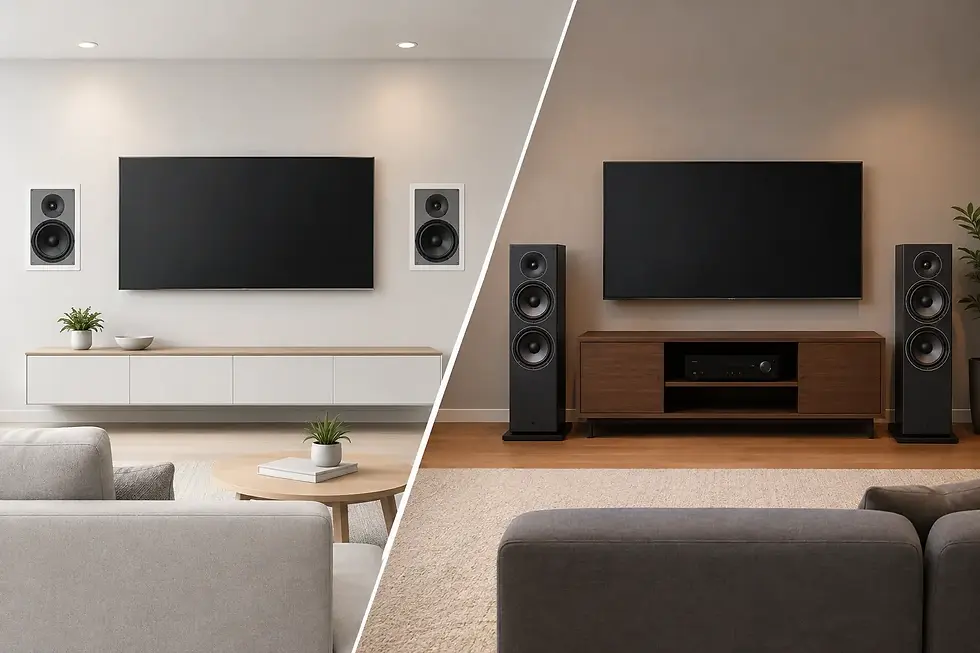
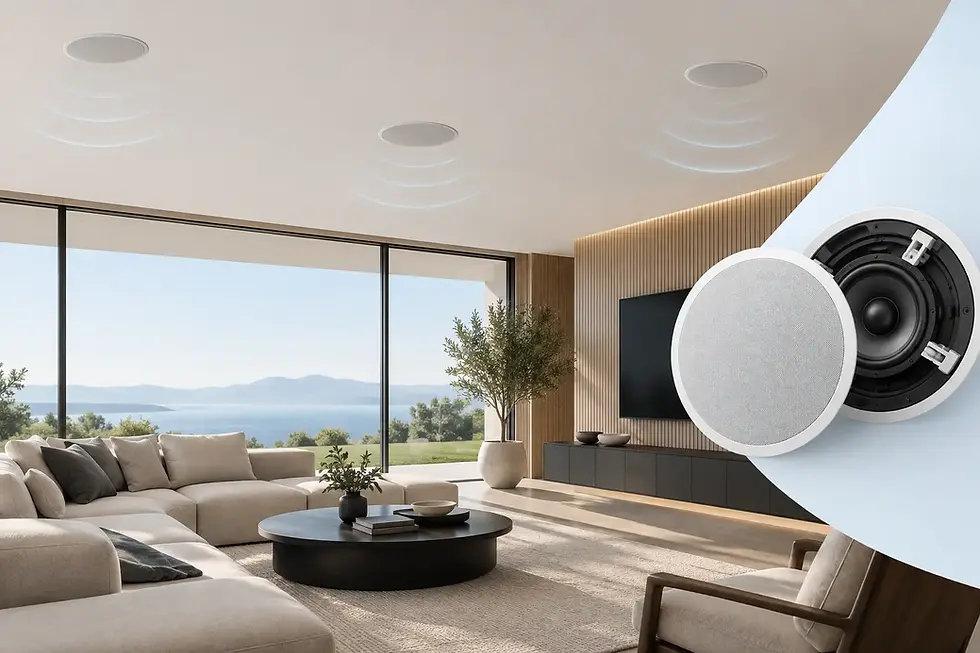
In-ceiling and in-wall speakers can provide balanced coverage without taking over a room visually. This is often ideal for kitchens, hallways, bedrooms, bathrooms, and open living areas where clean sightlines matter. In a dedicated listening room, theater, or larger entertaining area, the system may call for higher-output speakers, subwoofers, and amplification selected for the room's acoustics and intended volume.
Outdoor audio deserves its own planning. A pair of speakers mounted near a door may be enough for a small balcony, but it rarely delivers even coverage across a pool deck, outdoor kitchen, or expansive landscape. Distributed outdoor speakers and carefully placed subwoofers can create fuller sound at lower, more comfortable volumes. That protects conversation and helps prevent one loud area from carrying across the property.
There are trade-offs. Invisible speakers preserve design simplicity, but a homeowner who wants concert-level impact in a large great room may benefit from a different speaker strategy. A professional design process identifies those expectations early, before drywall, finishes, and furnishings limit the options.
One Interface for the Sources You Actually Use
A system becomes frustrating when the hardware is excellent but switching between sources is awkward. Control4 brings supported music services, personal media, television audio, and other connected sources into a consistent control experience. Rather than teaching guests or family members how to use several unrelated apps, the home presents familiar room controls in one place.
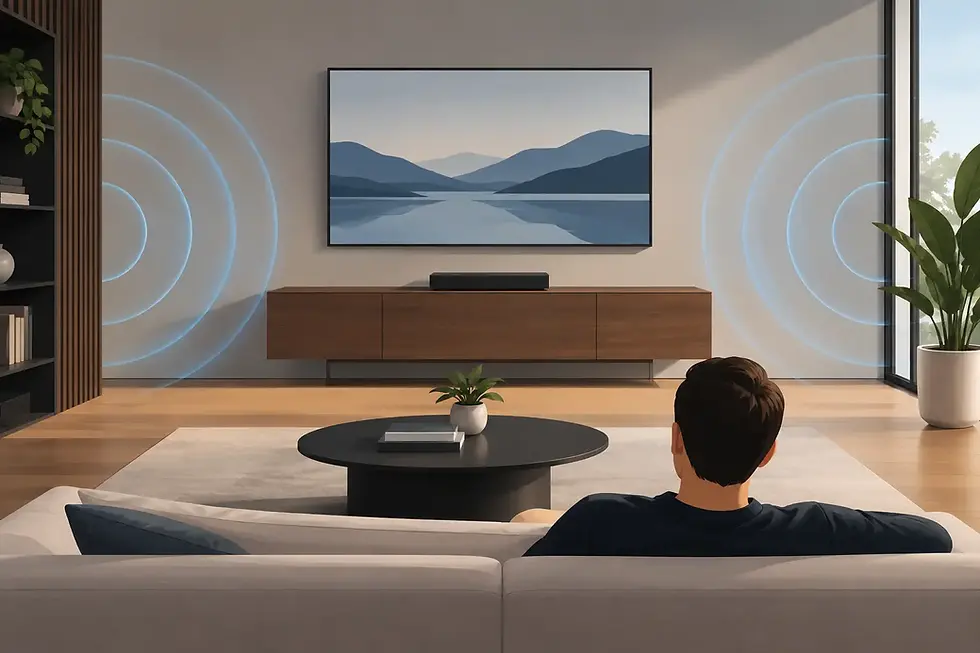
That consistency is particularly helpful for television audio. During a game or movie, audio can remain local to the media room. For a major event, sound from the television can be shared to adjacent spaces or outdoor entertaining areas, depending on the system design. The same interface that starts a playlist can control volume, select a source, and manage the room.
Reliable control also depends on the network beneath it. Audio streaming, control commands, video, surveillance, and remote access all compete for connectivity in a modern home. A properly designed network is not an accessory to whole-home audio. It is a key part of making the experience responsive and dependable.
Designed for Architecture, Not Added After the Fact
The best time to plan whole-home audio is early in a new build or major renovation. Speaker locations, equipment racks, wiring pathways, power, networking, and outdoor zones can be coordinated with architects, builders, designers, and landscape teams before walls close and finishes are installed.
That does not mean existing homes are excluded. Many properties can be upgraded thoughtfully with a blend of wired and wireless solutions, depending on construction, access, and performance goals. The right recommendation depends on the home, not a one-size-fits-all package.
Equipment placement also matters. Centralizing amplifiers and source equipment in a ventilated rack can keep living spaces free of visible components while making future service easier. Labels, documentation, and clean cable management may not be visible to the homeowner, but they make a meaningful difference when the system needs to be expanded, updated, or supported years later.
Scalability Without Starting Over
A well-planned Triad and Control4 system can grow with the property. A homeowner may begin with core indoor zones and prewire for future outdoor speakers, a theater, or a guest suite. Later additions can be incorporated into the same control environment rather than becoming isolated systems with separate remotes and logins.
This flexibility is valuable for changing lifestyles. A nursery may become a study, a guest room may become a fitness space, or a patio may evolve into a fully equipped outdoor entertaining area. The infrastructure should support those changes without requiring the homeowner to rethink the entire system.
Professional programming is equally important. Adding a room is not just a matter of connecting speakers. It involves naming zones clearly, setting source behavior, balancing volume expectations, integrating scenes, and confirming that the new space feels like a natural part of the home.
The Role of Professional Integration
Whole-home audio should feel effortless because considerable planning happens behind the scenes. A certified integrator evaluates room dimensions, ceiling heights, materials, furniture layouts, listening habits, source preferences, and future expansion plans. Those details determine speaker placement, amplifier capacity, network requirements, and the programming that brings it all together.
SmartHome-Techs approaches this process as a long-term technology partnership, not a one-time equipment sale. From early design coordination through installation, programming, and ongoing support, the goal is a system that remains clear, flexible, and reliable as the home evolves.
For homeowners, the most useful question is not, “How many speakers do I need?” It is, “How do I want my home to feel when people arrive, when the day begins, and when it is time to relax?” Start there, and the right audio design can make every room more inviting without making technology more complicated.
Comments