

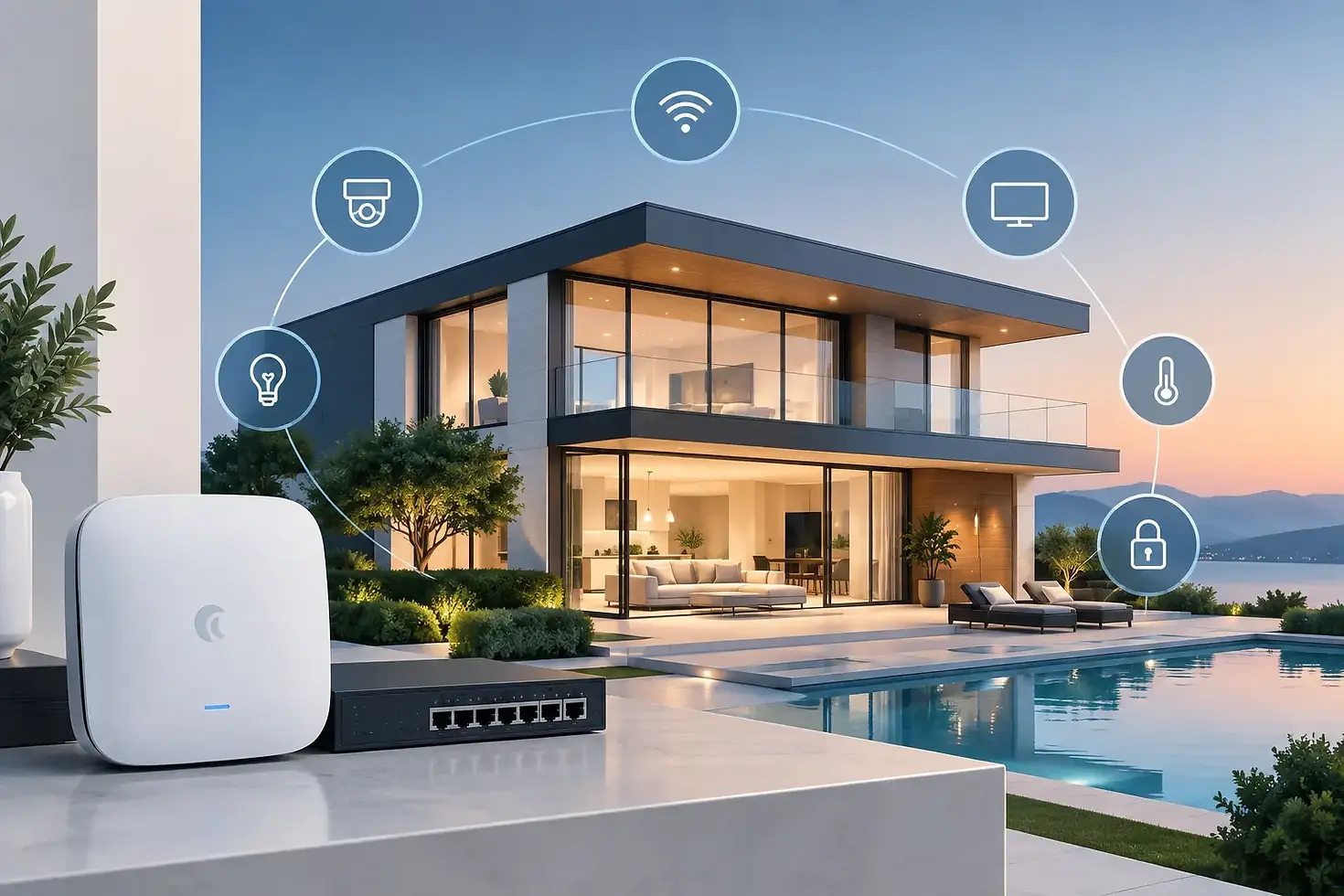
Why Araknis Networks Fit Luxury Smart Homes

A luxury home can have exceptional displays, carefully selected speakers, elegant keypads, and a sophisticated Control4 interface - yet still feel frustrating if the network behind it is not designed for the property. That is the central idea behind Araknis Networks: why luxury smart homes need professional networking. The network is not simply where Wi-Fi comes from. It is the operating foundation for the technology homeowners rely on every day.
When a security camera pauses, music drops during a dinner party, a video call fails in a home office, or an app cannot reach the home while the owner is away, the issue is often not the device itself. It is the infrastructure connecting every device, room, and outdoor space. A professionally planned Araknis network helps turn a collection of connected products into a home that responds predictably, privately, and with the level of performance a high-value property deserves.
Why Luxury Smart Homes Need Professional Networking
A typical luxury property places far greater demands on a network than a conventional residence. Square footage is only part of the equation. Construction materials, guest areas, detached structures, outdoor living spaces, multiple floors, dense landscaping, and equipment racks all affect coverage and performance.
Then consider the connected load. A whole-home system may include Control4 controllers, lighting processors, motorized shades, thermostats, touchscreens, televisions, streaming devices, multi-room audio, gaming systems, door locks, video doorbells, surveillance cameras, pool equipment, appliances, and voice assistants. Each device may use only a modest amount of bandwidth on its own. Together, they create a busy, always-on environment that needs intelligent management.
Consumer-grade networking equipment is often built for a small number of devices in a compact layout. It may work well for basic browsing and streaming, but it is rarely designed for the coverage planning, wired capacity, device visibility, and remote support required by an integrated estate. Adding more inexpensive extenders can create new problems, including competing wireless signals, inconsistent roaming, and a network that becomes harder to diagnose.
Professional networking starts with a different question: how does the home need to perform, room by room and system by system? The answer informs the equipment selection, access point locations, wired connections, network segmentation, and long-term service plan.
What Araknis Networks Brings to the Connected Home
Araknis Networks is purpose-built for professionally installed environments. Its switches, wireless access points, routers, and managed power solutions are designed to work as a coordinated platform rather than as a collection of unrelated boxes.
That coordination matters because a luxury smart home is not static. A homeowner may add a theater, expand surveillance coverage, create a dedicated office, install outdoor audio, or bring in new smart appliances over time. Professional-grade infrastructure gives the system a more orderly path to grow without turning every upgrade into a network replacement project.
Coverage That Is Planned, Not Assumed
Reliable Wi-Fi is not achieved by placing a powerful router in a closet and hoping its signal reaches the entire property. Walls, stone surfaces, metal framing, low-emissivity glass, cabinetry, and distance can all weaken wireless performance. Outdoor areas present their own challenges, especially around pools, patios, gates, and guest houses.
An Araknis wireless design uses properly placed access points to create intentional coverage throughout the home. Where practical, access points are connected by wired Ethernet rather than relying on wireless extenders. That approach preserves more capacity for phones, tablets, TVs, cameras, and automation devices while delivering a more consistent experience as residents move through the property.
The right design depends on the home. A newly built residence allows network wiring and access point placement to be considered before drywall goes up. An existing home may call for a more selective approach that protects the architecture and finishes. In either case, the goal is not simply a stronger signal. It is dependable service where the homeowner actually lives, works, entertains, and relaxes.
A Wired Foundation for High-Performance Systems
Wireless connectivity is essential, but the most demanding devices should not all compete for Wi-Fi. Televisions, media players, Control4 controllers, surveillance recorders, desktop workstations, and wireless access points benefit from hardwired network connections.
Managed Araknis switches provide the backbone for those connections. They can deliver Power over Ethernet to compatible access points, cameras, and other devices, reducing the need for separate power outlets at each installation point. More importantly, they give a professional integrator visibility into what is connected and how the network is performing.
For homeowners, the benefit is simple: entertainment, automation, and security systems have the stable foundation they need. For builders and designers, thoughtful infrastructure planning helps keep technology equipment organized, serviceable, and out of sight.
Better Control of Security, Privacy, and Device Traffic
A sophisticated home can contain dozens, or even hundreds, of networked endpoints. Not every device should be treated the same way. Family devices, guest devices, cameras, automation components, and smart appliances may have different access requirements and different security considerations.
A professionally configured network can separate traffic into appropriate segments. For example, guests can have internet access without gaining visibility into private home systems. Cameras and automation equipment can be managed in a more controlled environment than personal laptops and phones. This does not make a home invulnerable, and no network can eliminate every cyber risk. It does create a more deliberate security posture than placing everything on one shared Wi-Fi password.
Privacy also extends to network administration. A professional installation is configured around the homeowner's needs, access preferences, and service expectations. The result is a system that supports remote access and monitoring without making convenience the only consideration.
The Difference Between Fast Internet and a Well-Designed Network
It is common to blame an internet provider whenever technology becomes unreliable. Sometimes the provider is the issue. But fast internet service cannot correct poor Wi-Fi placement, overloaded wireless channels, insufficient switching capacity, unmanaged device traffic, or a weak connection between the service entry point and the rest of the home.
Think of internet service as the road leading to the property. The network is the private road system inside it. Even if the highway is wide and fast, the experience suffers if there is only one narrow route serving every room, device, and outdoor zone.
This distinction becomes especially clear with video surveillance and entertainment. High-resolution cameras need consistent local connectivity to record and display footage. A theater system needs stable access to streaming services, but its internal control should remain responsive even when the internet connection is interrupted. A professionally designed network supports both local performance and external access rather than treating every system as a basic Wi-Fi client.
Remote Support Is Part of the Experience
Technology should not require a homeowner to troubleshoot an equipment rack after a long day or while traveling. One advantage of Araknis Networks in a professionally integrated system is the ability for qualified technicians to monitor and support many network functions remotely, with permission and appropriate configuration.
Remote management can help identify a device that has gone offline, assess a coverage concern, update supported equipment, or restart a locked-up component without scheduling an unnecessary onsite visit. Managed power can also allow a technician to power-cycle specific connected equipment remotely when that is the appropriate fix.
Remote service does not replace every onsite visit. Physical damage, wiring changes, major expansions, and coverage issues may require a technician at the property. Still, faster visibility into the system can reduce disruption and help keep small issues from becoming large inconveniences.
Professional Design Protects the Home's Design Intent
Luxury technology should support the interior and architectural experience, not compete with it. That means network equipment must be planned alongside lighting, millwork, ceiling details, landscape design, and furniture layouts.
A well-considered installation can place access points where they perform effectively without interrupting important visual lines. Equipment racks can be organized in appropriate utility locations. Structured wiring can be labeled and documented so future work is more efficient. These details are rarely glamorous, but they shape how dependable and maintainable the home remains years after move-in.
For a new build, network planning belongs early in the design process, alongside electrical, HVAC, security, and audiovisual planning. For a renovation or existing home, an experienced integrator can identify where targeted wiring, upgraded switching, or access point changes will produce the greatest improvement without unnecessary disruption.
A Network That Supports How You Live
The best smart home systems make complexity feel quiet. A morning scene adjusts lighting and climate. Music follows the family from the kitchen to the patio. Cameras remain accessible when the home is empty. A single interface brings the systems together without requiring everyone to understand what is happening behind the walls.
That level of ease depends on professional networking. At SmartHome-Techs, Araknis Networks can be designed as part of a personalized Control4 environment, with the coverage, capacity, organization, and service strategy suited to the property rather than a one-size-fits-all package.
A luxury smart home should feel composed when the house is full, when the family is away, and when the technology evolves. Starting with the network gives every other system the room to perform that way.
Comments