

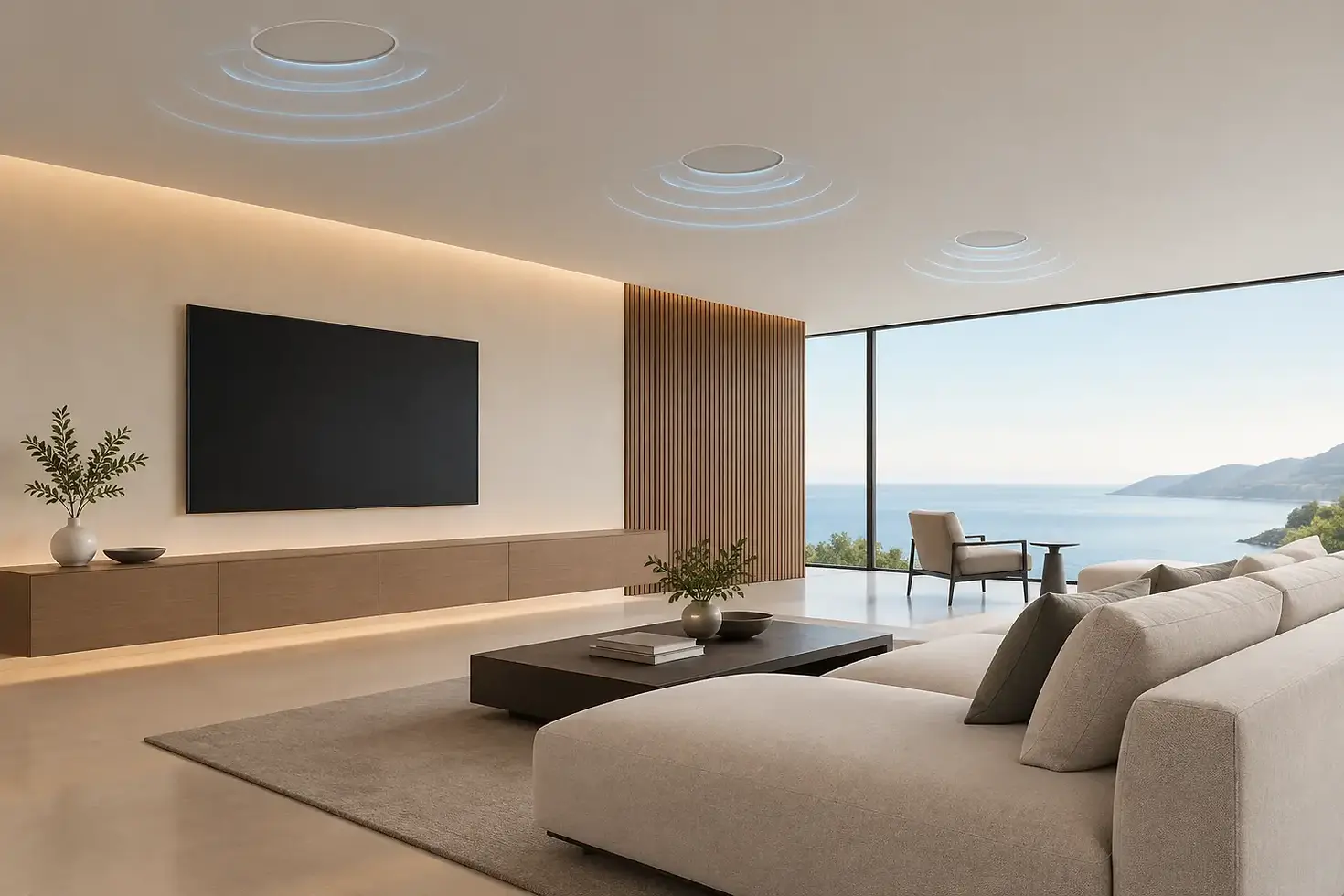
Triad Speakers for Invisible Luxury Home Audio

A beautifully detailed ceiling should not have to compete with rows of speaker grilles. Triad speakers: invisible architectural audio for luxury homes give homeowners, architects, and designers a way to bring music, television audio, and cinematic sound into a room while protecting the visual intent of the architecture.
For a waterfront residence in South Florida, that may mean keeping a dramatic coffered ceiling uninterrupted. In a contemporary Colorado home, it may mean preserving clean plaster walls, natural wood treatments, or a carefully composed great-room sightline. The goal is not simply to hide technology. It is to make entertainment and everyday living feel more considered.
What Makes Triad Speakers Different?
Triad is known for custom-performance audio designed to fit the home rather than force the home to accommodate the equipment. Its architectural and invisible speaker options can be integrated into ceilings and walls, with solutions ranging from discreet in-ceiling models to speakers installed behind a finished plaster surface.
The difference is most apparent in the planning. Rather than treating speakers as a late-stage accessory, a professional audio design considers the room’s dimensions, ceiling height, finishes, furniture layout, listening zones, and intended use. A kitchen used for morning news has different needs than a double-height living room used for entertaining. A media room requires a different approach than a covered patio exposed to South Florida humidity or Colorado temperature swings.
Triad systems are also designed to work within a broader entertainment environment. Sources, amplification, television audio, subwoofers, and control can be organized centrally, leaving the room calm and uncomplicated. Homeowners see the result as simple access to the music or content they want, in the spaces where they spend time.
Invisible Architectural Audio for Luxury Homes
Invisible speakers are compelling because they remove a familiar design compromise. After installation, finishing, and painting, the speaker disappears into the wall or ceiling plane. There are no visible grilles to coordinate with paint colors, millwork, stone, wallpaper, or minimalist interiors.
That visual restraint is especially valuable in rooms where every surface matters. Formal living areas, primary suites, galleries, spa-style baths, and open-plan great rooms can support high-quality distributed audio without placing hardware at the center of attention. Designers retain freedom with finishes, and homeowners gain a more immersive environment without adding visual noise.
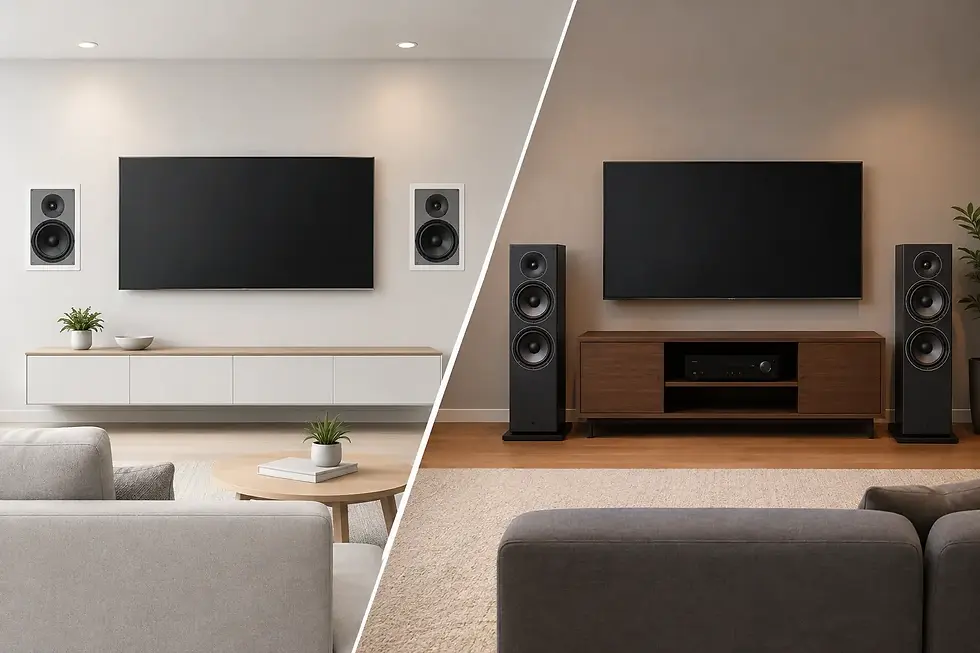
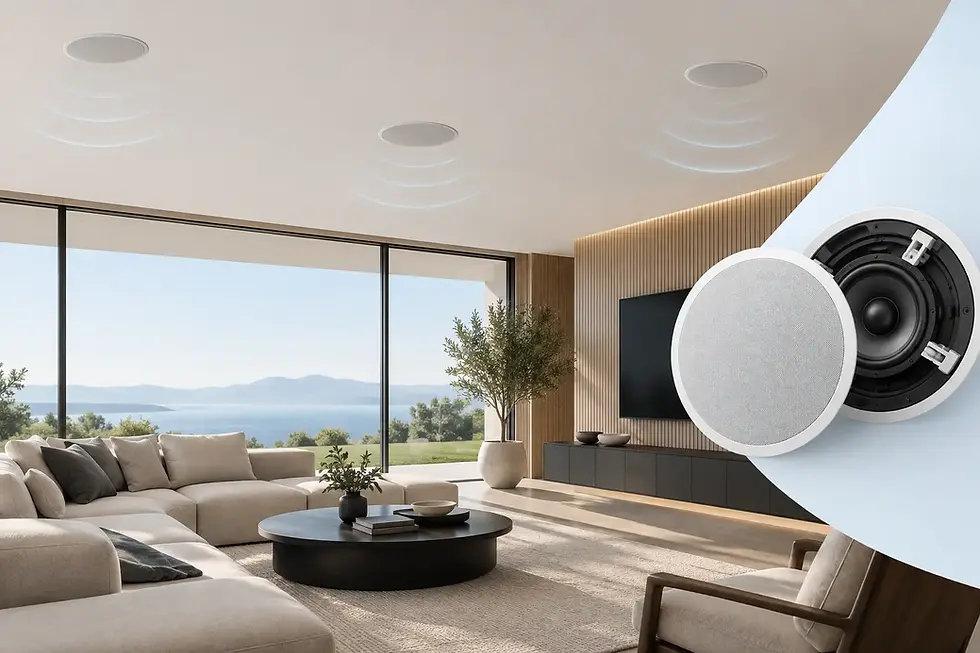
Invisible audio is not limited to background music. With the right engineering, speaker placement, and supporting equipment, it can create an enveloping experience for music, television, and entertaining. Still, invisibility is a design decision as much as an acoustic one. A traditional in-ceiling speaker may be the better choice in a room where maximum output, highly focused coverage, or a more value-conscious budget is the priority. A visible architectural grille can also be nearly unnoticeable when selected and positioned well.
The strongest system design does not insist that every room use the same speaker type. It matches performance and aesthetics to the way each area will be used.
The finish process matters
An invisible speaker is only as convincing as its installation. These systems are installed during construction or renovation, then carefully integrated into the surrounding wall or ceiling finish. Coordination between the technology team, drywall professionals, painters, and the broader build team is essential.
Poorly planned installation can create uneven surfaces, unwanted vibration, or service challenges later. Proper backing, placement, wiring, amplification, and finish work protect both sound quality and the appearance of the final surface. This is one reason invisible audio is best addressed early, before drywall is closed and interior details are finalized.
Sound That Belongs in Every Room
Luxury whole-home audio should feel personal, not complicated. A homeowner may want jazz in the kitchen, a podcast in the gym, television sound in the family room, and quiet in the bedrooms. During a gathering, the same playlist can follow guests from the entry to the terrace, pool area, and outdoor kitchen.
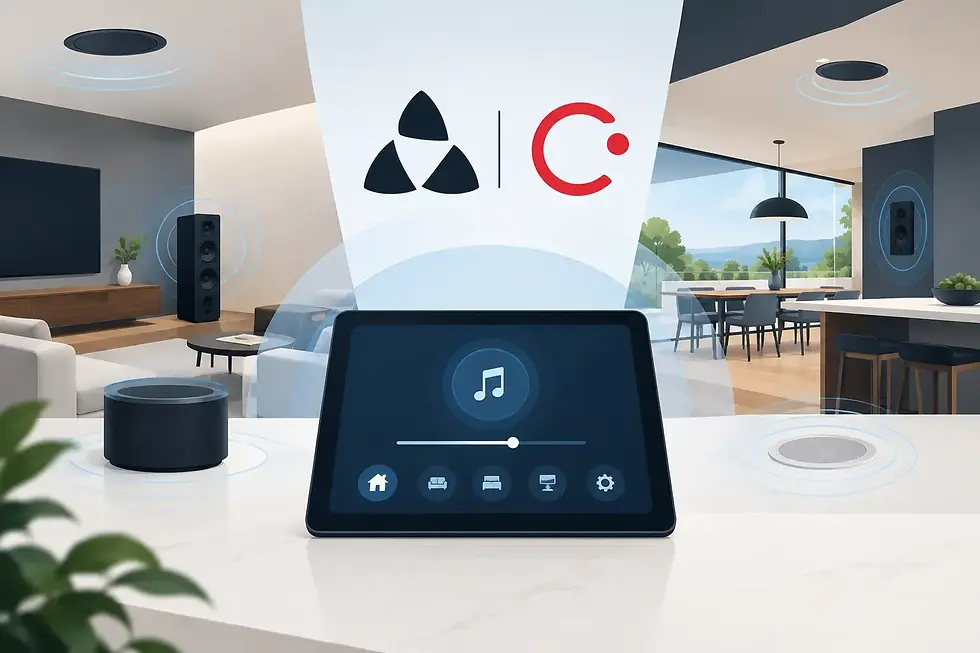
With a professionally programmed Control4 system, those experiences can be managed from elegant touchscreens, keypads, mobile devices, or voice control. A single command can start music in selected areas, adjust volume by zone, or turn off entertainment throughout the property at the end of the evening. The interface remains simple even when the system behind it includes multiple audio sources, amplifiers, televisions, and speaker zones.
This unified approach avoids the common frustration of disconnected apps and inconsistent device behavior. Instead of asking guests or family members to navigate separate remotes and streaming interfaces, the home responds in a predictable way. Audio becomes part of the home’s larger rhythm, alongside lighting, shading, climate, and security.
For example, an Entertain scene can bring up welcoming landscape lighting, set a comfortable temperature, and start a curated playlist in the main living spaces. A Goodnight scene can turn off audio, lower shades, lock doors, and confirm the home is secure. The technology is present when it improves the moment and quiet when it does not.
Designing for Performance, Not Just Placement
Speaker location affects more than appearance. It determines clarity, coverage, and how naturally sound fills the room. In an open-concept floor plan, one pair of speakers may not adequately cover the kitchen, dining area, and living room. In a large primary bathroom, a single speaker can leave noticeable gaps in coverage. Careful zoning and placement solve these issues without forcing the volume uncomfortably high.
Subwoofers also deserve early consideration. They provide the low-frequency foundation that makes music feel full and gives film soundtracks weight. Depending on the room, a compact architectural subwoofer can be concealed in cabinetry, a wall, or another planned location. The objective is balanced sound, not excessive bass.
Ceiling height, hard surfaces, and glass walls all influence acoustics. A room with expansive windows, stone flooring, and minimal soft furnishings may require additional design attention to avoid a bright or reflective sound. Conversely, a heavily furnished space may benefit from a different speaker layout or power strategy. This is where professional design replaces assumptions with a system tailored to the actual home.
New construction offers the most flexibility
New builds provide the clearest path for invisible audio because wiring, speaker backing, equipment locations, and architectural coordination can be included before finishes are complete. Builders and architects can reserve appropriate space, and homeowners avoid opening finished walls later.
Retrofit projects remain very possible, but they require a more selective approach. Existing framing, insulation, mechanical systems, and finished surfaces may limit placement. In those situations, a blend of discreet in-ceiling speakers, carefully located invisible speakers, and hidden cabinetry solutions can deliver an excellent result with less disruption.
Reliability Is Part of the Luxury Experience
A premium audio system should not require constant troubleshooting. The hidden components behind the experience matter: properly sized amplifiers, reliable networking, organized equipment racks, ventilation, surge protection, and clean labeling. When these details are handled well, audio starts quickly, rooms respond consistently, and service is easier if a component ever needs attention.
Scalability matters, too. A homeowner may begin with main living spaces and later add a guest suite, gym, home office, theater, or outdoor entertainment zone. A thoughtful infrastructure plan creates room to expand without rebuilding the foundation of the system.
SmartHome-Techs approaches audio as one part of a personalized intelligent home. By coordinating technology with the property’s architecture and daily routines, the system can remain easy to use today while adapting to future needs.
The best time to discuss invisible Triad audio is before the final finishes make every decision more expensive. Bring the audio plan into the conversation alongside lighting, millwork, and furnishings, and the finished home can sound as intentional as it looks.
Comments