


Luma Security Cameras for a Smarter Home

A security camera should do more than send another notification to your phone. At a primary residence, vacation property, or new build, Luma security cameras can become part of a more considered security experience: one that gives you a clear view of the property, fits the architecture, and works from the same interface as the rest of your smart home.
That distinction matters. A collection of consumer cameras may be quick to purchase, but it can also leave homeowners managing separate apps, inconsistent recordings, weak Wi-Fi coverage, and alerts that are too frequent to be useful. A professionally designed surveillance system starts with the property itself - how people arrive, where packages are delivered, which access points matter, and what you need to see when you are away.
What Makes Luma Security Cameras Different?
Luma is designed for professionally integrated surveillance. Rather than treating cameras as isolated devices, the platform can be planned as a complete system with cameras, recording, networking, remote access, and smart-home control working together.
For many homeowners, the most visible benefit is clarity. Properly selected and positioned cameras can provide meaningful detail at gates, driveways, entrances, pool areas, garages, side yards, and other high-value zones. The goal is not simply to capture activity. It is to capture a view that is useful when it matters, without compromising the appearance of the home.
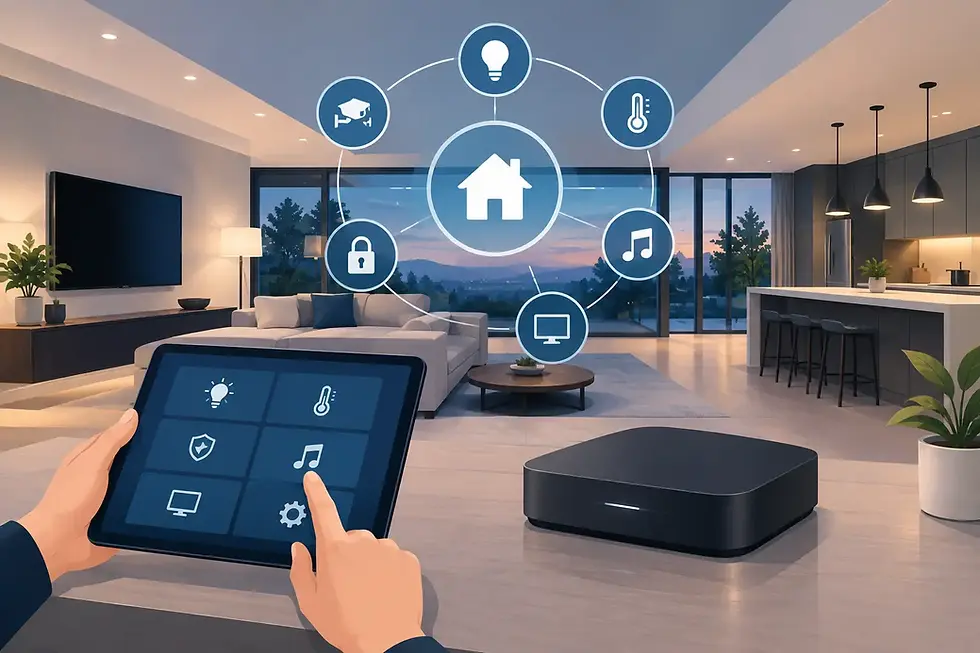
Professional integration also changes the everyday experience. Instead of opening one app for cameras, another for locks, and another for lighting, a Control4-based system can place key camera views and related controls within a unified interface. From a wall touchscreen, mobile device, or selected in-home display, you can check a front entry camera, view a perimeter camera, or respond to an unexpected arrival with less friction.
The exact experience depends on the equipment selected and the way the system is programmed. That is why planning matters more than choosing a camera based on a specification sheet alone.
Start With Coverage, Not Camera Count
The right number of cameras is not a measure of how secure a property is. Strategic coverage is. A large estate may need only a handful of carefully placed cameras in some areas, while a compact home with multiple access points, a detached garage, or a rear alley may benefit from more detailed planning.
A professional design typically begins with the moments you want to monitor. You may want a clear view of visitors approaching the front door, vehicles entering the driveway, activity near a boat dock, or movement around a backyard gate. Commercial properties may prioritize employee entrances, point-of-sale areas, inventory access, parking, and customer-facing spaces.
Focus on the Views That Answer Real Questions
Wide-angle coverage is helpful for understanding what happened across a broad area. But a camera intended to identify a person at a doorway or capture vehicle activity at the driveway should be positioned for that specific purpose. Mounting height, angle, lighting conditions, and distance from the subject all affect whether the image provides useful detail.
This is where DIY installations often fall short. A camera can technically cover an area while still producing an unhelpful view because it is too high, faces direct sun, sees only the top of a visitor's head, or is placed beyond the reach of dependable network connectivity.
A site review allows the system to account for gates, landscaping, exterior finishes, rooflines, glare, nighttime conditions, and future construction. The result can feel far more intentional than cameras added one at a time after a problem occurs.
Recording and Network Design Are Part of Security
A camera system is only as dependable as its recording and network foundation. If a camera loses connectivity, recordings are not retained appropriately, or remote viewing struggles when the household is busy streaming and working, the system is not delivering the reassurance it should.
Luma security cameras are generally best considered alongside a professionally planned network and recording solution. Wired connections are often preferred for fixed exterior cameras because they support consistent performance and reduce dependence on congested wireless coverage. They can also simplify power delivery where compatible infrastructure is used.
Recording requirements should be discussed early. Retention needs vary based on the number of cameras, resolution, recording settings, local requirements, and how long you want footage available. A family that wants to check activity after a delivery may have different needs than a second-home owner who is away for extended periods or a business that needs to review operational events.
There is also a practical balance to strike with alerts. Motion notifications can be valuable, but a system that reports every passing car, swaying branch, or neighborhood pet becomes easy to ignore. Thoughtful configuration can focus attention on meaningful zones and events, helping the system remain useful rather than disruptive.
A Better Experience When Cameras Work With Control4
Surveillance becomes more convenient when it is connected to the actions you already take around the home. A camera view can appear when someone rings the doorbell, letting you see who has arrived without searching for the right application. From the same environment, you may be able to check lighting near an entry, verify that a gate is closed, or review a camera before granting access to a visitor.
This unified approach is especially valuable for larger homes and multi-property owners. A simple “away” experience might bring selected security devices into the right state, while remote access provides a familiar way to review the property from another city or while traveling. The value is not in adding complexity. It is in making the technology feel organized and available when you need it.
For commercial settings, centralized visibility can support daily operations as well as security. An owner or manager may want to check a delivery entrance, confirm opening procedures, or view a location remotely after hours. The appropriate design should respect how staff work, which areas require privacy, and who should have access to cameras and recordings.
Design Matters on High-Value Properties
Security equipment is often installed after the architecture is complete, which can lead to exposed cabling, awkward camera placement, and equipment that competes with the exterior design. On a luxury home, that is not a small detail.
When surveillance is included during the design or renovation phase, camera locations can be coordinated with soffits, eaves, landscape features, gate structures, and network pathways. The installation can be discreet without sacrificing the view required for effective coverage.
Existing homes deserve the same care. A capable integrator can evaluate available pathways and mounting options to minimize visual impact while prioritizing reliable operation. Sometimes the best location for image quality is not the best location for aesthetics, so the solution is a considered compromise rather than an afterthought.
Questions to Settle Before Installation
Before selecting equipment, define what you need the system to accomplish. Consider who needs access, whether the home is occupied year-round, which areas need live viewing versus recorded evidence, and how cameras should interact with doors, gates, lighting, and alarms.
It is equally wise to discuss privacy. Cameras should be aimed at your own property and configured with respect for neighbors, guests, and household staff. Indoor cameras, in particular, require careful consideration. Many homeowners find that exterior coverage and entry-point visibility provide the assurance they want while preserving a more comfortable sense of privacy inside.
Finally, plan for service. Networks change, homes expand, passwords are updated, and family needs evolve. A professionally supported system gives you a path for adjustments rather than leaving you to troubleshoot a collection of disconnected devices on your own.
SmartHome-Techs designs Luma surveillance as part of a personalized Control4 environment, with attention to coverage, network performance, clean installation, and the way your household actually lives. The right system should feel quiet in the background, ready with a clear answer when you want to know what is happening at home.


Comments